
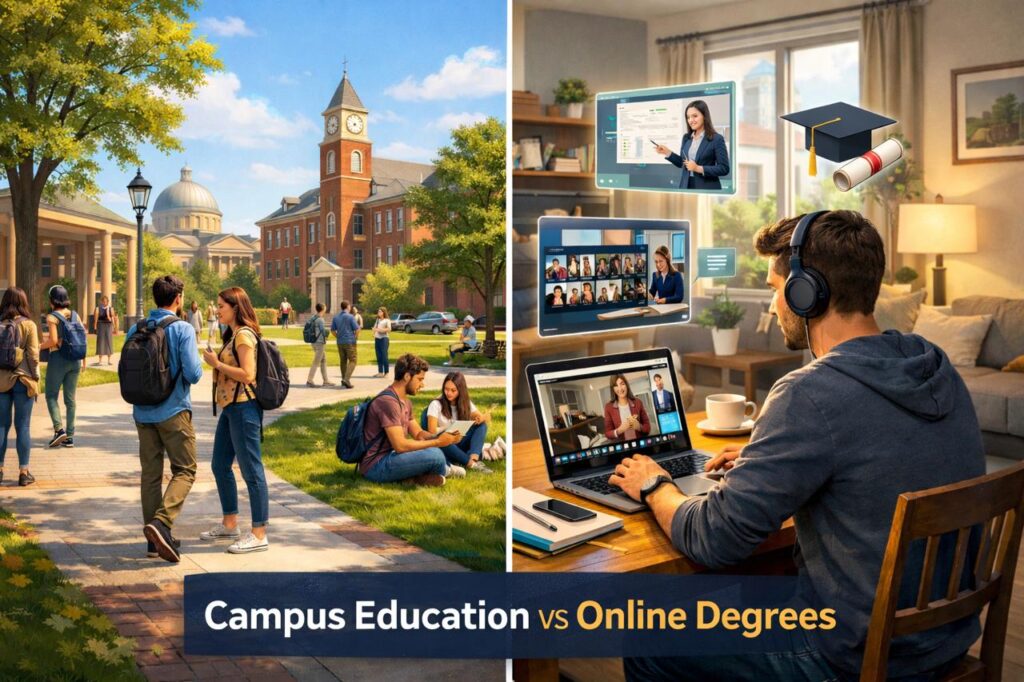
Education looks totally different than it did ten years ago. These days, you don’t have to grab your backpack and sit in a classroom from nine to five. You could just as easily log in from your bed, a coffee shop, or halfway around the world. And with all this change, the debate about campus versus online learning is louder than ever. Technology keeps changing how we study, connect, and even land jobs.
So, which way is better?
Honestly, there’s no clear winner. Both campus and online learning come with their own perks—and a few hidden headaches. Let’s break down the real differences so you can figure out what’s right for you.
What’s the Difference, Anyway?
Before we get into pros and cons, let’s make it clear what we’re talking about.
Campus learning is the old-school, in-person setup. Picture students walking to class, hanging out in the library, chatting with professors face-to-face, and living in dorms or making the daily commute.
Online learning? That’s the digital route. Classes happen on your laptop or phone. Assignments get submitted online, and you chat with classmates and teachers through video calls, discussion threads, or email.
Online education is way more accessible and flexible than it used to be, but going to campus still offers something special—structure, community, and real social interaction. That’s why people still can’t agree on which is better.
Campus vs. Online Learning: The Real Benefits
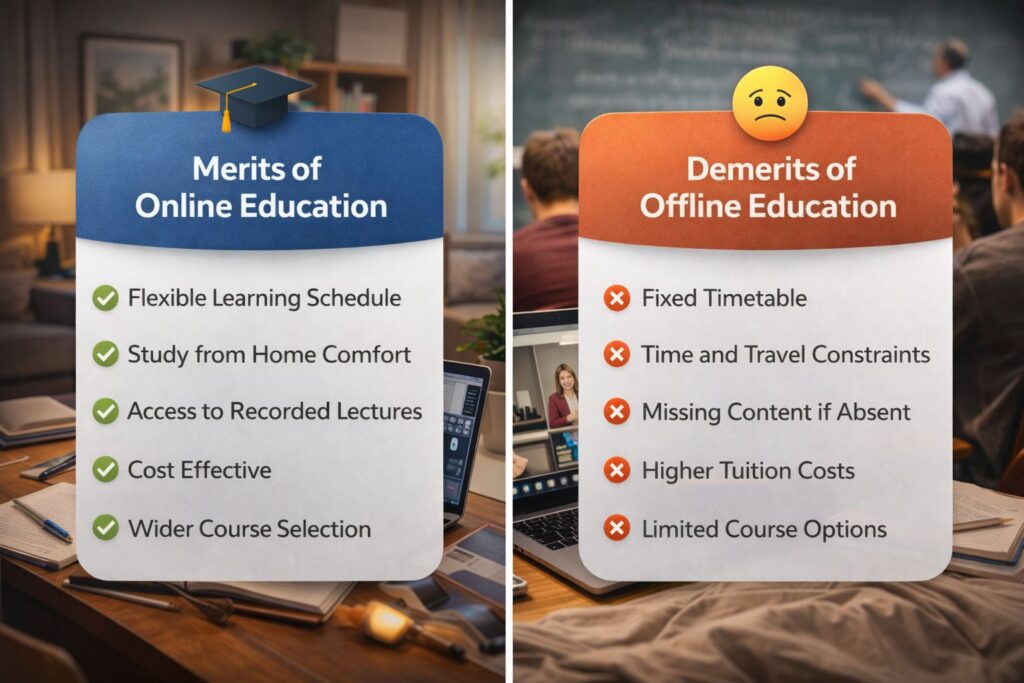
To pick the right fit, you’ve got to know what each style brings to the table.
Why Choose Campus Learning?
1. Real Conversations
You actually talk to your professors and classmates. That means quick answers to your questions, spontaneous debates, and a better shot at finding a mentor.
2. Networking
Campuses are social by nature. You get study groups, campus events, internships, and alumni connections that can help when you’re looking for a job.
3. Routine
Classes start and end at set times. Attendance counts. There’s a built-in schedule—great if you need a little push to stay on track.
4. Better Facilities
Think libraries, science labs, sports fields, or even just a spot to hang out between classes. It’s all there.
What About Online Learning?
1. Total Flexibility
You can study from anywhere—no moving, no commuting.
2. Less Expensive
You save on rent, travel, and other campus costs.
3. Go at Your Own Pace
Miss something? Just pause and rewatch the lecture. You control the speed.
4. More Choices
Pick courses from schools around the world without leaving your home.
Which Works Best? It Depends on You
Campus life throws you into the action—perfect for people who want face-to-face connections and a structured day. Online learning gives you freedom, but you’ll need to be motivated and organized. Your personality, goals, and lifestyle all play a role in what works.
Self-Discipline: The Make-or-Break Factor
Here’s something people don’t talk about enough: accountability.
On campus:
Someone’s always watching. Attendance is tracked. Professors notice if you disappear. Your friends might nudge you if you slack off.
Online:
No one really knows if you’re zoning out (or still in bed). Distractions are everywhere. It’s easy to fall behind if you’re not careful.
So, online learners have to push themselves. That’s tough, but honestly? If you build that skill, it pays off big time. Employers love people who can manage themselves.
Time Management: Structure vs. Freedom
Managing your day looks pretty different depending on the setup.
On campus:
Classes and calendars are set. You know exactly when to show up and when you’re done for the day. That helps if you need clear boundaries.
Online:
You pick your own hours and build your own routine. It’s awesome if you’re juggling work or family, but you need to hold yourself accountable.
If you’re already working or running a business, online courses fit easily into your life. If you need more structure, campus classes may keep you more focused.
Flexibility: The Big Win for Online Learning
Let’s be real, flexibility is where online learning shines.
No Commute
Campus students can spend hours just getting to class. Online students? They’re already home.
recorded lectures .
Missed something? Just watch it again. That’s a big deal, especially if you need a topic explained twice.
Juggling Life
Parents, full-time workers, or anyone with a busy schedule gets a real advantage with online classes. You can fit study time around everything else.
But for some people, in-person classes are just easier to stick with and feel more engaging. It all comes down to how you learn best.
Education looks totally different than it did ten years ago. These days, you don’t have to grab your backpack and sit in a classroom from nine to five. You could just as easily log in from your bed, a coffee shop, or halfway around the world. And with all this change, the debate about campus versus online learning is louder than ever. Technology keeps changing how we study, connect, and even land jobs.
So, which way is better?
Honestly, there’s no clear winner. Both campus and online learning come with their own perks—and a few hidden headaches. Let’s break down the real differences so you can figure out what’s right for you.
What’s the Difference, Anyway?
Before we get into pros and cons, let’s make it clear what we’re talking about.
Campus learning is the old-school, in-person setup. Picture students walking to class, hanging out in the library, chatting with professors face-to-face, and living in dorms or making the daily commute.
Online learning? That’s the digital route. Classes happen on your laptop or phone. Assignments get submitted online, and you chat with classmates and teachers through video calls, discussion threads, or email.
Online education is way more accessible and flexible than it used to be, but going to campus still offers something special-structure, community, and real social interaction. That’s why people still can’t agree on which is better.
Campus vs. Online Learning: The Real Benefits
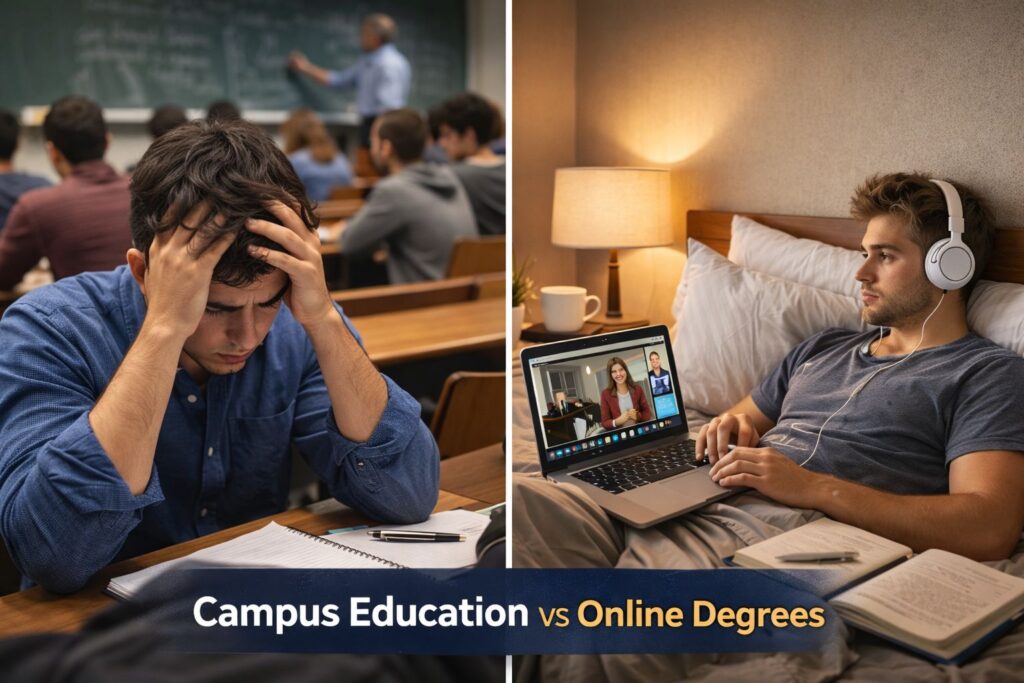
To pick the right fit, you’ve got to know what each style brings to the table.
Why Choose Campus Learning?
1. Real Conversations
You actually talk to your professors and classmates. That means quick answers to your questions, spontaneous debates, and a better shot at finding a mentor.
2. Networking
Campuses are social by nature. You get study groups, campus events, internships, and alumni connections that can help when you’re looking for a job.
3. Routine
Classes start and end at set times. Attendance counts. There’s a built-in schedule—great if you need a little push to stay on track.
4. Better Facilities
Think libraries, science labs, sports fields, or even just a spot to hang out between classes. It’s all there.
What About Online Learning?
1. Total Flexibility
You can study from anywhere—no moving, no commuting.
2. Less Expensive
You save on rent, travel, and other campus costs.
3. Go at Your Own Pace
Miss something? Just pause and rewatch the lecture. You control the speed.
4. More Choices
Pick courses from schools around the world without leaving your home.
Which Works Best? It Depends on You
Campus life throws you into the action—perfect for people who want face-to-face connections and a structured day. Online learning gives you freedom, but you’ll need to be motivated and organized. Your personality, goals, and lifestyle all play a role in what works.
Self-Discipline: The Make-or-Break Factor
Here’s something people don’t talk about enough: accountability.
On campus:
Someone’s always watching. Attendance is tracked. Professors notice if you disappear. Your friends might nudge you if you slack off.
Online:
No one really knows if you’re zoning out (or still in bed). Distractions are everywhere. It’s easy to fall behind if you’re not careful.
So, online learners have to push themselves. That’s tough, but honestly? If you build that skill, it pays off big time. Employers love people who can manage themselves.
Time Management: Structure vs. Freedom
Managing your day looks pretty different depending on the setup.
On campus:
Classes and calendars are set. You know exactly when to show up and when you’re done for the day. That helps if you need clear boundaries.
Online:
You pick your own hours and build your own routine. It’s awesome if you’re juggling work or family, but you need to hold yourself accountable. If you’re already working or running a business, online courses fit easily into your life. If you need more structure, campus classes may keep you more focused.
Flexibility: The Big Win for Online Learning
Let’s be real-flexibility is where online learning shines.
No Commute
Campus students can spend hours just getting to class. Online students? They’re already home.
recorded Lectures .
Missed something? Just watch it again. That’s a big deal, especially if you need a topic explained twice.
Juggling Life
Parents, full-time workers, or anyone with a busy schedule get a real advantage with online classes. You can fit study time around everything else.
But for some people, in-person classes are just easier to stick with and feel more engaging. It all comes down to how you learn best.